 ورود / ثبت نام


Basic drawing is the first step towards understanding form structure and perspective . In this course, we learn to break forms down into simple solids, understand how they relate to one another and examine them from different angles.
The aim is to look beyond the surface appearance of a form and understand its structural logic, connected volumes and underlying geometry .
Taught by Yaser Khanbaray, the course comprises 15 lessons in 3 sections .
How You Receive the Course: The lessons are pre-recorded videos. After purchase, you will be directed to the course channel. This is a digital course; no physical product or package is shipped.
 Support and Contact with Your Instructor
This course includes Learning support . Throughout the course, you can contact your instructor and submit exercises to receive feedback and guidance .
Understanding the Course and Learning Approach
Who Is This Course For?
For students who want to learn drawing from the fundamentals or strengthen their structural understanding, especially in drawing, painting, illustration, animation, character design, architecture, graphic design, industrial design, sculpture and caricature.
Teaching Approach
We approach drawing through structural analysis: what simple solids make up a form, how they connect and how they change when viewed from another angle. The goal is to develop an understanding you can apply to many different forms.
Why Begin with Structure?
Understanding volume and perspective provides a foundation for approaching portraits, figures and character design with greater awareness. Rather than rushing towards a surface likeness, this course focuses on the logic of form and the relationships between its parts.
Structure Is the Grammar of Drawing
Structure helps you classify, analyse and redraw forms. This approach does not confine artistic expression to a fixed formula; it provides a foundation for understanding form and making more informed drawing decisions.
What Will You Practise?
- Analysing complex forms through simple solids
- Understanding circles, cubes and combined forms in perspective
- Understanding connections, curvature and movement in solids
- Studying proportion, underlying geometry and linear contours
Basic Drawing Curriculum
1Section 1: Perspective through Circles and Solids5 lessons · Lessons 1–5
1. Drawing theory and approach: line quality and linear structure
2. Principles of circles in perspective and their structure
3. Basic solids and how they combine and connect
4. Volumetric analysis and diagrams based on warping
5. Mechanics of movement and structural diagrams of solids
2Section 2: Perspective through Squares and Cubes, and Structural Analysis5 lessons · Lessons 6–10
6. Perspective and structural analysis of cubes and shapes
7. Geometry and structure of arcs in perspective
8. Analysing curves through circle subdivisions at different angles
9. Drawing imagined objects without a reference using perspective
10. Planning and proportion through object sketches from different angles
3Section 3: Pyramidal Forms, Connections, Combined Solids and Organic Forms5 lessons · Lessons 11–15
11. Two-faced objects and forms with multiple perspective orientations
12. Polyhedral and moving objects with multiple perspective orientations
13. Cylindrical and combined solids and their connections in perspective
14. Curved solids, warping and combinations
15. Underlying geometry and linear contours through shapes and gesture
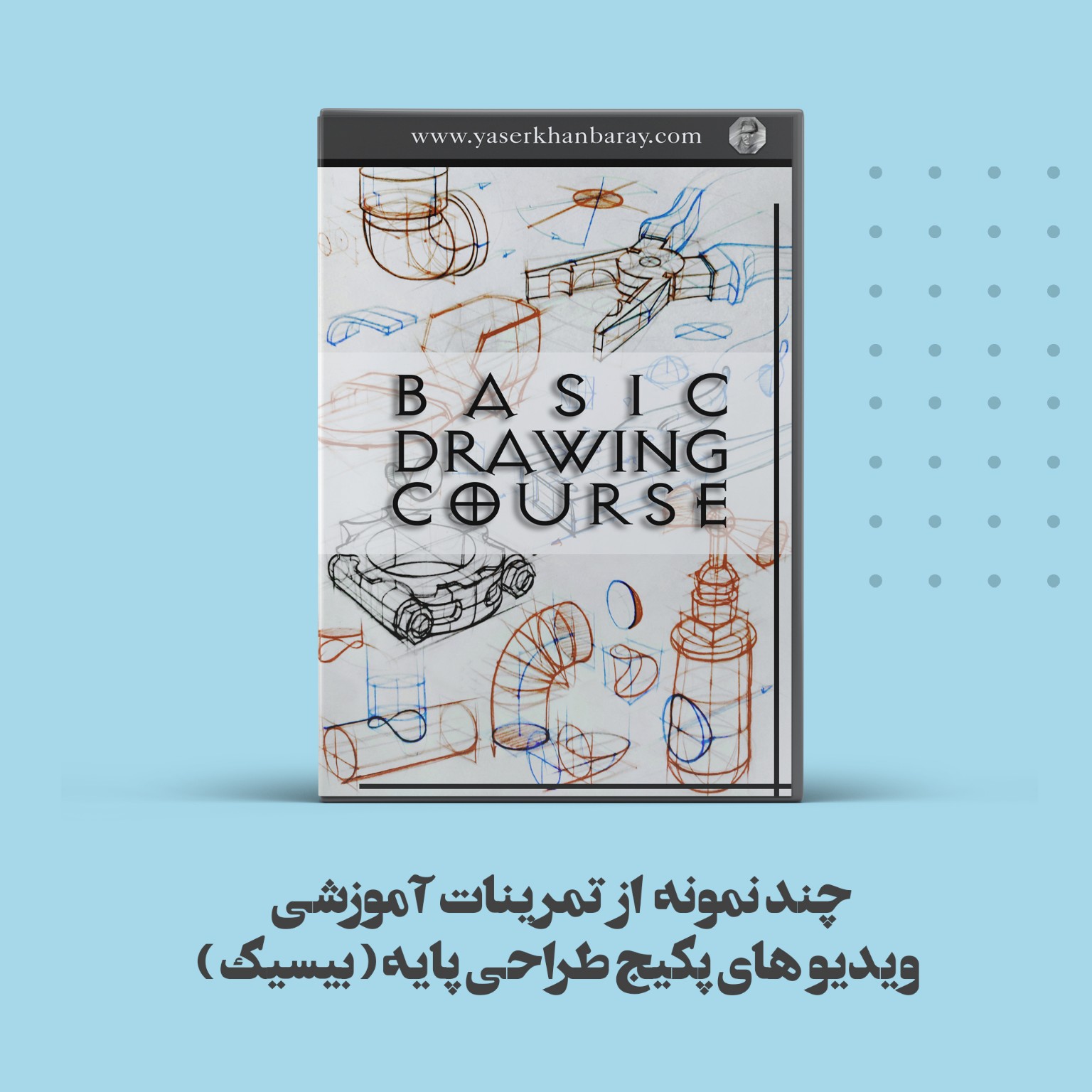
Sample Course Exercises
Select the cover image to view the examples.
Sample Course Exercises
Select the cover image to view the examples.
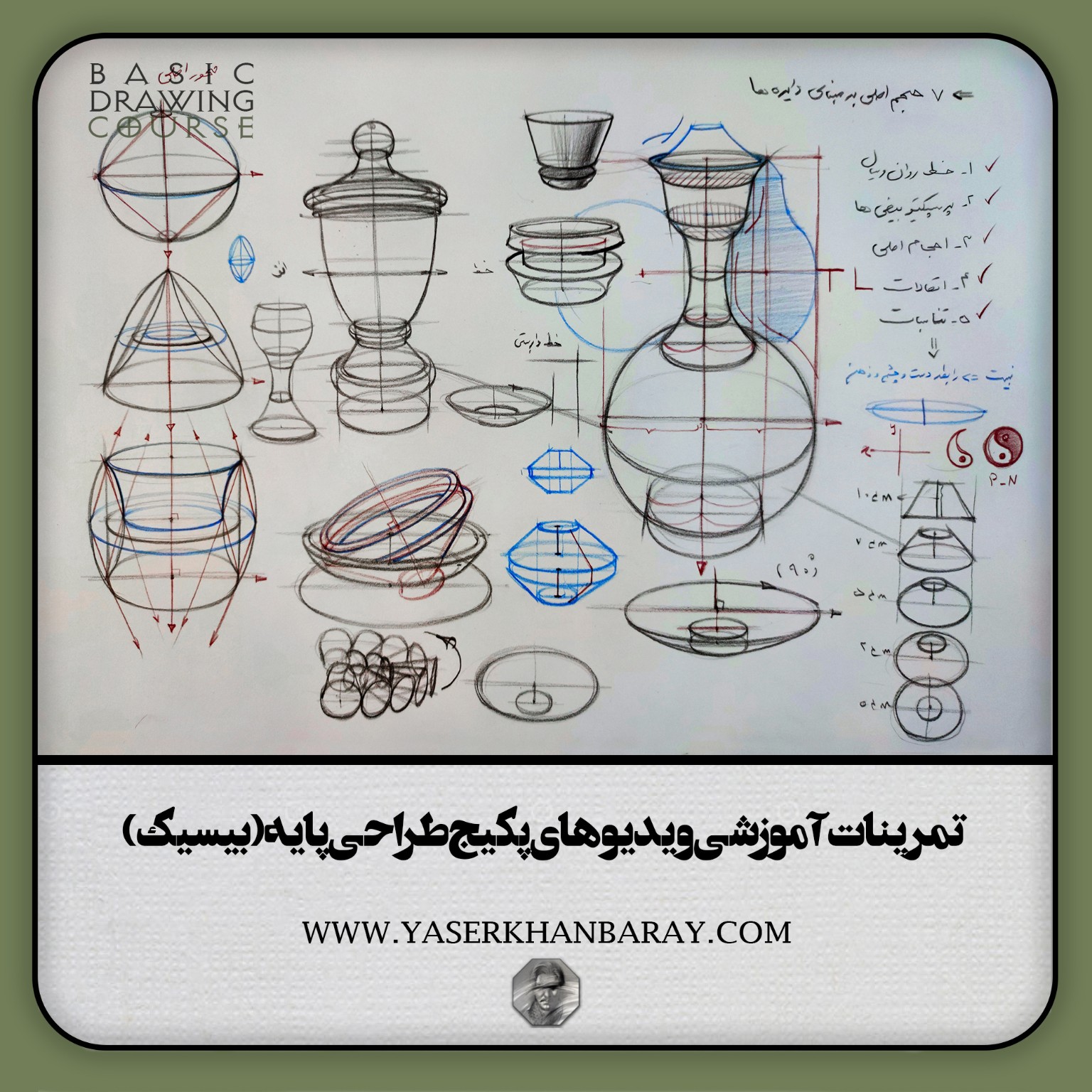 Sample exercise 1
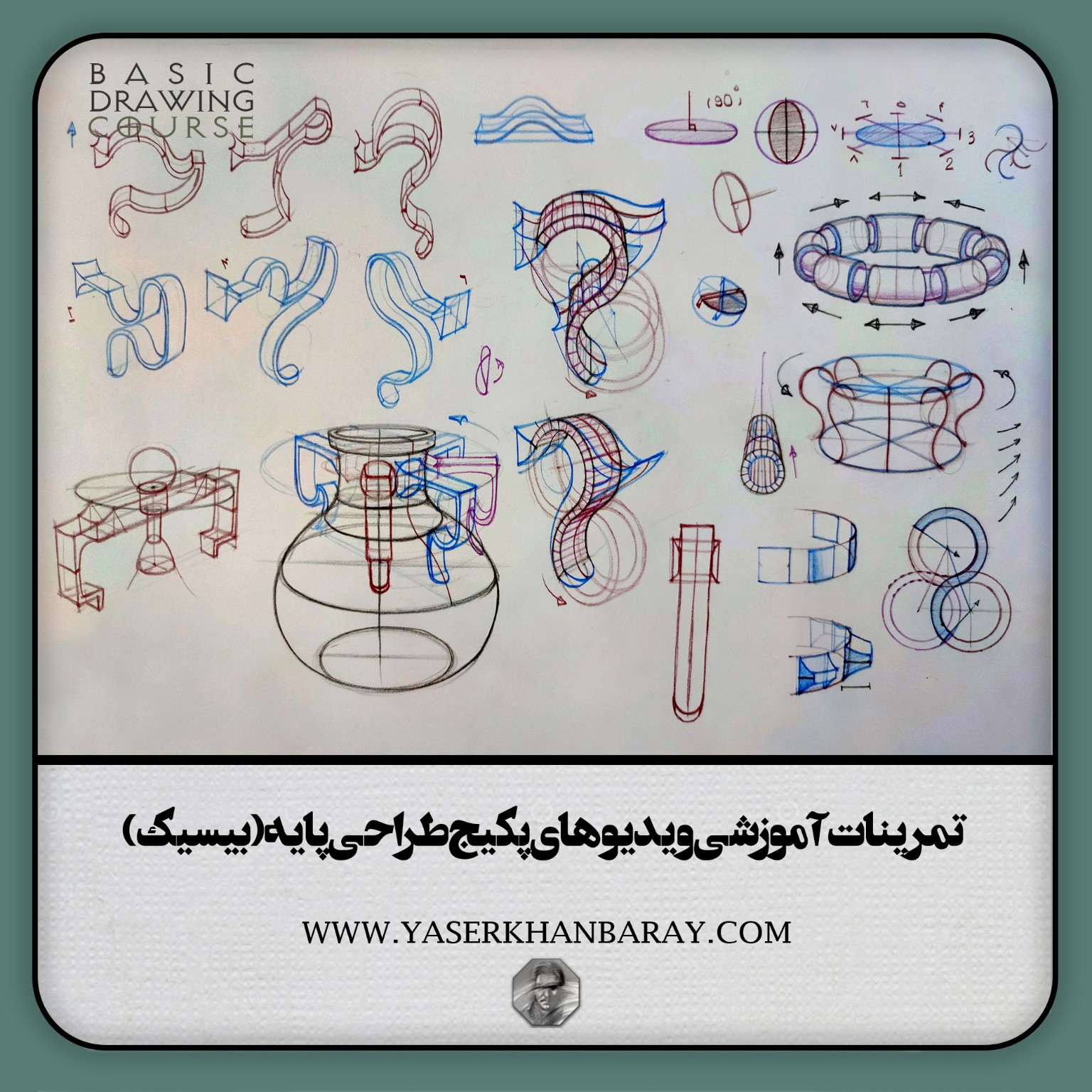 Sample exercise 2
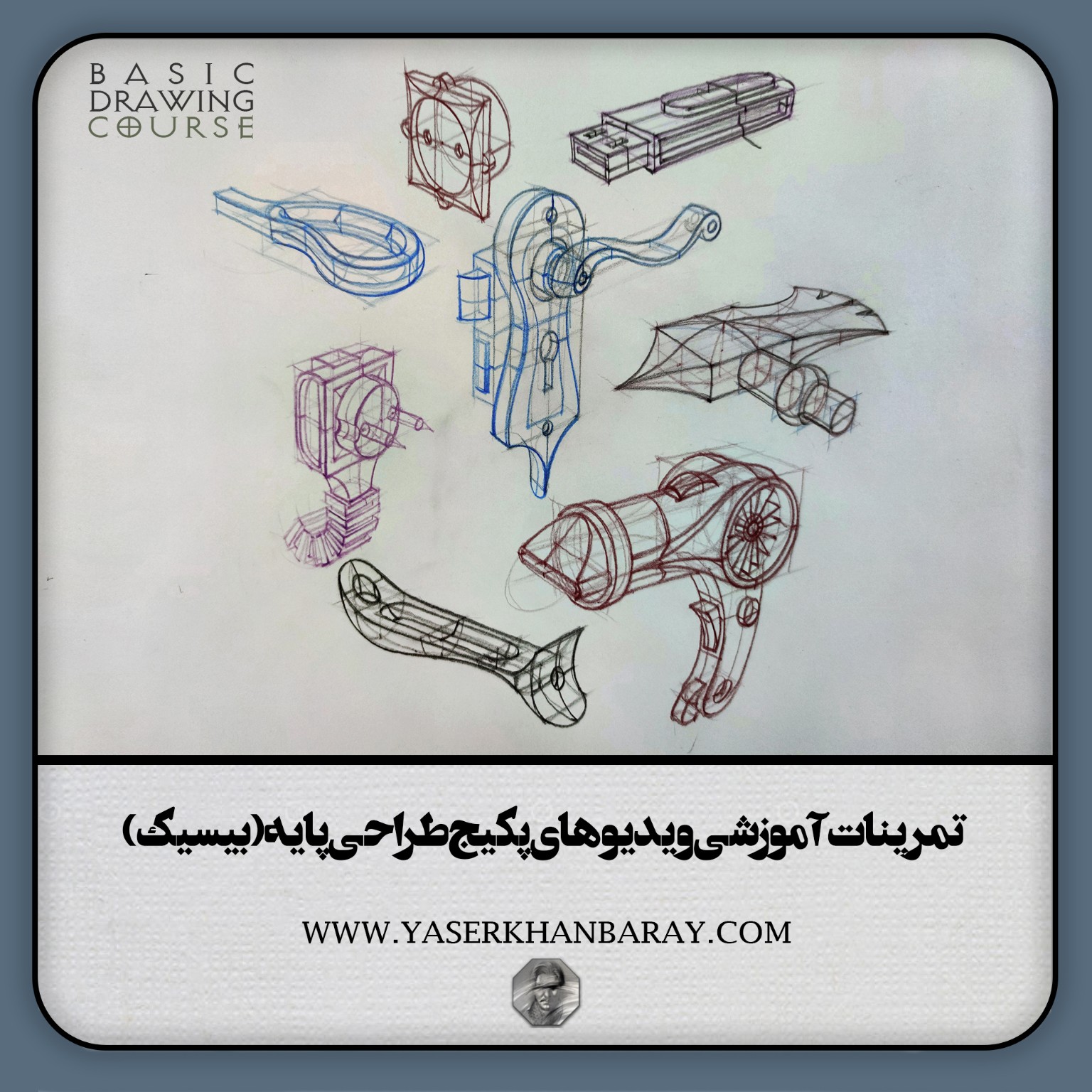 Sample exercise 3
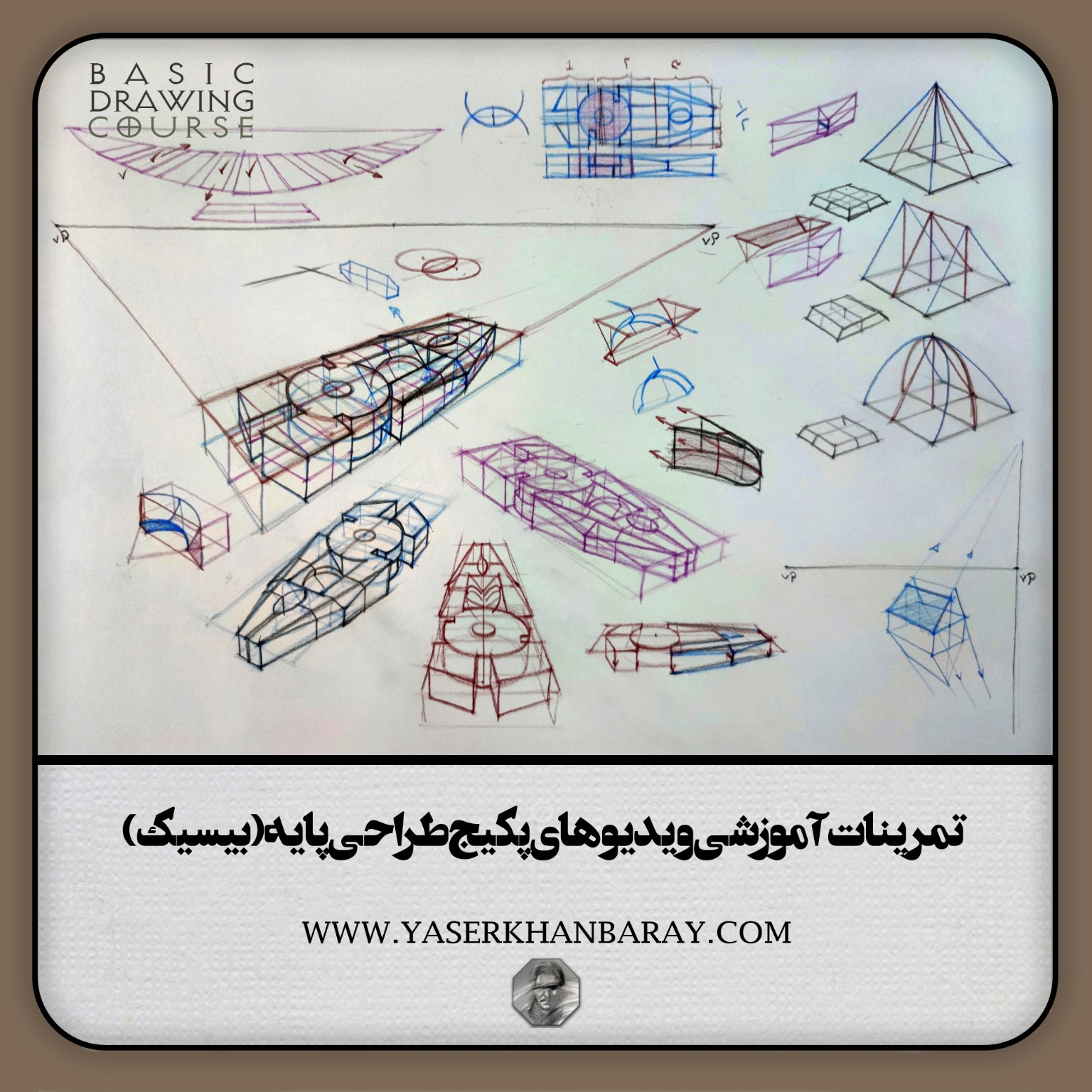 Sample exercise 4
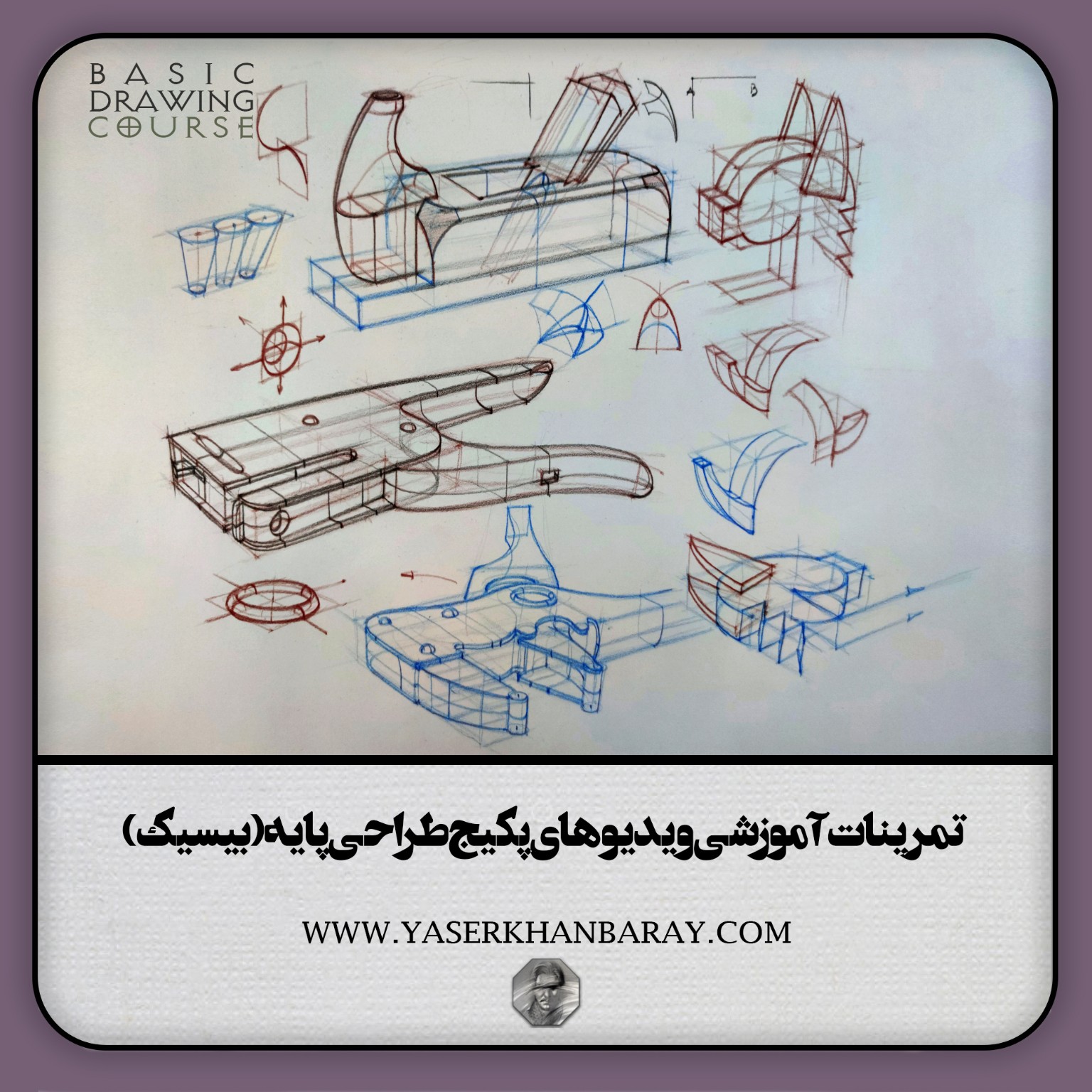 Sample exercise 5
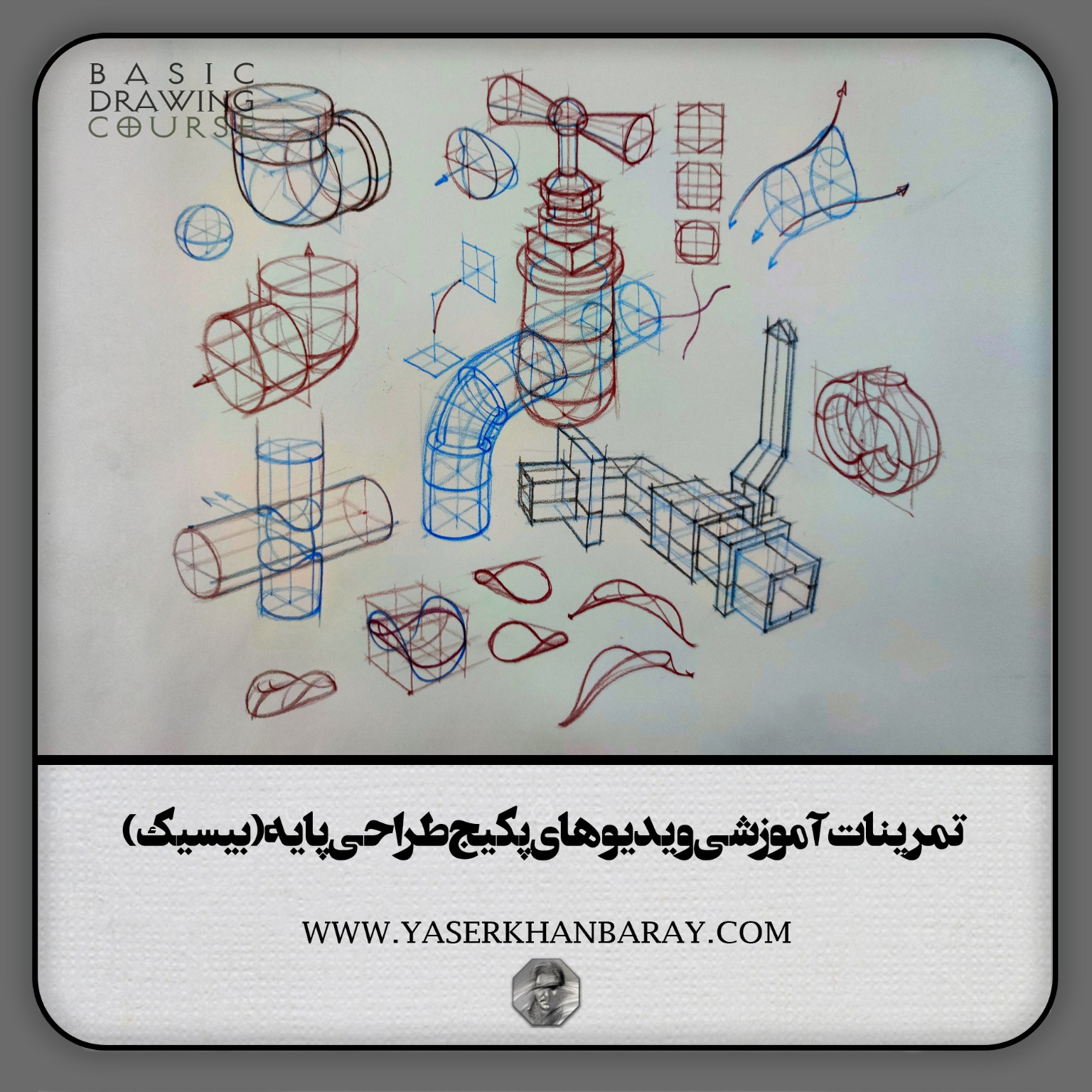 Sample exercise 6

Pouyan Shahrokhi
I watched it and thought it was excellent. Thank you, teacher.